Tuesday, June 10, 2014

Sue Monk Kidd - The Secret Life of Bees


The Secret Life of BeesThe Secret Life of Bees by Sue Monk Kidd
My rating: 4 of 5 stars

Lily Owens bears a heavy burden. She lost her mother when she was a four year old child. Worse, she was responsible for her mother’s death. Even worse, her father is a bitter abusive man who makes her life living hell.

Their maid, Rosaleen, is a surrogate mother to her and the only bright spot in Lily’s life. A sequence of events leads Lily and Rosaleen to run away from home. Lily had discovered a picture of black Mary in a box that belonged to her mother with the name of a place Tiburon written on the back.

Hungry for some information about her mother, Lily wants to follow this lead. In Tiburon a similar picture on the bottle of honey leads Lily to the house of August Boatwright, who runs a bee farm.

Right then Lily knows that the answers she is looking for are to be found here. She is taken in by August to help with the beekeeping in exchange for a stay.

The novel is set in the year 1964 when the times were tumultuous for people of color. It is in such times that Lily chooses to live with a family of black women.

Despite the number of problems that Lily faces, the novel does not become depressing. It always holds out hope. It also manages to read like a thriller - what will Lily do next? - the question keeps us turning pages. We are charmed by the story of a deeply humane person, August Boatwright, who is fiercely independent, affectionate and inclusive.

This is a novel with a heart that draws the reader in and inspires us to be humane and forgiving.

View all my reviews

Sunday, June 08, 2014

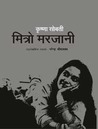
Krishna Sobti - Mitro Marjani


Mitro MarjaniMitro Marjani by Krishna Sobti
My rating: 5 of 5 stars

Samitravanti alias Mitro is married into a respectable family of traders. Her in-laws are gentle god fearing people. It is a full household of eight people. They are constantly in a spat with each other. Mitro is not the kind of a person to sit coyly behind her ghunghat, doing household chores.

Her wayward ways cause great grief to her in-laws. Her older sister-in-law tries to curb her high spirited behavior. Her husband often beats her up when she refuses to listen to him. He is shocked by her blatant sexuality and feels emasculated by it.

Despite her sharp tongue and constant flightiness, Mitro is an affectionate person and genuinely cares for her mother-in-law and her older sister-in-law. Her problem is her unresponsive husband, who refuses to gratify her deep need for affection and, well, sex.

This is A-Class literature. The story runs smooth and taut. Although the focus of the story is Mitro, it is also a sharp glimpse into a small joint family unit which threatens to fall apart. The language is superb. It is Punjabi as spoken by people, blended into Hindi and Urdu. Krishna Sobti gets every emotion, every reaction, every bit of dialogue just right.

There is a glorious chapter in here where vengeful sisters-in-law(bhabhis) taunt their sister-in-law (Nanad) who has left her husband's home on flimsy grounds. Their taunting is subtle and couched in solicitousness. It is family politics at its best.

Although Mitro Marjani is famous for its portrayal of female sexuality, I found it just as useful for its portrayal of a Punjabi family and a way of life that is no more now.

View all my reviews

Saturday, June 07, 2014

Ismat Chugtai - Masooma


MasoomaMasooma by Ismat Chughtai
My rating: 4 of 5 stars

The misfortunes of Masooma began when her father made off to an undisclosed location (Pakistan?) with all the money and property of the family, and three older sons. Her father was supposed to send for the rest of the family once he settled down. But this never happened. Masooma's mother, along with 3 girls and a baby boy was left to fend for herself.

Women of high birth are cloistered and completely dependent on their men. They are not expected to step out into the world and fend for themselves. Begam Sahiba, Masooma's mother, was such a woman. Men had lined up to marry her when was of age. Her parents had picked among the grooms available. They wanted her to be married to a professional man who was khandani to boot. She lived like a queen all her life. Till one fine day when her husband disappeared.

She sold whatever she could to make ends meet. When all failed, she came to Bombay(as it was known then) and becomes a film producer's mistress. The film producer, Ehsaan, was more of a hustler, ran out of money. His eye fell on the beautiful teenage daughter of the Begam, Masooma.

Masooma, who was slated for a comfortable life, whose name was selected out of Quran Sharif, who was the much feted daughter after 3 sons, suddenly found her life take a nasty turn. She was passed on from one man to another and took on the exotic name of Nilofer for this alternate life that she had.

In the early chapters, Masooma remains a shadowy figure. She is seen as an emotionally high strung girl who beats up Ahmed, the first man chosen for her. At this stage in her life, it is her mother and Ehsaan who control her. Later, she learns the importance of her lovers, the money and gifts they bestow upon her.

Despite being perceived as a woman who sucks the menfolk dry of their money, we see that it is Masooma/Nilofer who is being ruthlessly used by men to further their greed and satisfy their lust. She holds no importance to them as a person. She is the convenient receptacle of their ill-repute. Being men, her lovers come out smelling of roses and prosper, while she is seen as a dirty woman.

Ismat Chugtai has a formidable reputation in literary circles. To write a novel like this in the early part of the past century was indeed daring. Her works did not pop up in my school syllabus like the stories of Munshi Premchand, Mohan Rakesh, Upendranath Ashq etc. It is only in reading extra-curricular literature that I got to know of her.

The picture that Ismat Chugtai paints is not pretty. Her socialist sensibilities make her depict the world of the Capitalists who use dirty tricks to evade taxes, ruin the lives of the proletariat to further their businesses. They even use charity work as a mask to further their ends. These are people Masooma has to depend upon to keep her body and soul together.

I do not think this book is the best work of Ismat Chugtai. It has a hurried feel to it. And often Masooma (poor girl) seems just a vehicle for the author to vent her ire against Capitalists. Like I said earlier, Masooma seems a shadowy figure at the start. She comes into her own towards the end, but even so, her personality is not really rounded. All other characters in the novel fade into the background or are brought to the forefront as per the need of the moment. The presence of the author is very evident in the book.

But there is no denying the power of Ismat Chugtai. It is her unforgiving depiction of the underbelly of the society that is very valuable.

View all my reviews

Thursday, June 05, 2014

Chetan Bhagat - 2 States

2 States: The Story of My Marriage2 States: The Story of My Marriage by Chetan Bhagat
My rating: 3 of 5 stars

I am not a huge fan of Chetan Bhagat. If I can help it, I do not read his books. I picked this one up as I had already seen the movie. This is odd in itself as I did not particularly like the movie.

Now, after having read the book, I lay the blame for the slightly lackluster movie at the door of the director. He underplayed the humor in the book, I see now. I also blame the dull looking Arjun Kapoor, he does not bring out the passion the hero feels for his girl.

The book, as most people know already,(as Chetan Bhagat is one of the most read authors of these times)is about a North-Indian Krish meeting a South-Indian Ananya at IIMA and falling headlong in love with. They find to their consternation that their parents do not see things their way. They are forced to make a serious effort to make their parents agree to their point of view.

Also thrown into the plot is a trouble-maker father that Krish has. On top of everything else, Krish has to sort out the issues he faces with his father.

Despite all these problems floating around, the book is not depressing or heavy. It is a light read and quite funny in places.

The language is passable. We have to admit that despite the widespread usage of English in our country, we are not experts at it.

View all my reviews

Sunday, May 04, 2014

Sarra Manning - Pretty Things

Pretty ThingsPretty Things by Sarra Manning
My rating: 4 of 5 stars

I must confess I do not remember how I came by this book. Did I buy this book off a second hand book stall? Did I order it off some online book shop? Was I gifted this book? My memory being what it is, I should go back to writing the date and venue of purchase on the fly leaf. It is a good habit that I have lost in recent times.

This novel is touted as a Splashproof beach read and has a 100% waterproof cover. By rights it should be something you read and feel faintly dissatisfied with. Or you should feel like you just wound up wasting a precious day or two of your life. But that does not happen.

Despite its ditzy appearance, the book gets to the core of the matter and keeps you chuckling and turning the pages with pleasure.

Brie, Charlie, Walker and Daisy are four 17 year old London kids. Charlie does not want to spend his summer watching inane television shows with his best pal Brie. So he joins a drama club for the summer and persuades Brie to go along. Walker is genuinely interested in movies as a career and feels the drama club will help him. Daisy is opting for this as she wants something good on her college application.

They get to train with Lavinia, who was big on the Stage at one time.  She chooses The Taming of the Shrew to play and our foursome land the four lead parts.  They start hanging out together and a chain of events is set in motion that changes (somewhat) their attitude towards life.

Brie has self-image issues. Charlie is gay but likes only straight people. Walker is nicknamed Shagger and Wanker but has fallen hard for Daisy. Which is no use as Daisy is the super-bitch Lesbian.

Brie, Charlie, Walker and Daisy get a chapter each by turns to describe the progress of the summer through their own eyes. As we can see, all these characters have a different voice and a different way of looking at things.

Despite the story being a teen-lit, it is not all fluff. The problems and the issues they face are real. The author maintains a light tone which is appropriate for a beach read and also manages to slip in enough seriousness to keep you engrossed. The language is very witty and she is really best at describing things comically.


If you are in the mood for a light read which is not aimed at airheads, this is a perfect book for you.

I re-read the book especially to be able to write about it.

View all my reviews

Thursday, May 01, 2014

Alexander McCall Smith - La's Orchestra Saves the World


La's Orchestra Saves the WorldLa's Orchestra Saves the World by Alexander McCall Smith
My rating: 4 of 5 stars

I discovered Alexander McCall Smith via his Sunday Philosophy Club series, also known as Isabel Dalhousie series. He is better known as the author of the No. 1 Detective Agency series.

He seems to like writing series of novels on a set of characters and places. He also wrote (or is still writing) the 44 Scotland Street series.

I love his series. It is nice to settle into a familiar world of characters and curious stories that surround them. But I am afraid they are a strain on my pocket.

You see, Alexander McCall Smith is not found widely in the libraries that I visit. I fall so deeply in love with his stories, that I wind up buying the books, which puts a strain on my pocket.

I have just finished buying up the entire series of Isabel Dalhousie. Now it looks like I will have to start buying up the 44 Scotland Street series as well. They are so good, I just HAVE to read them.

In the meantime, I found La's Orchestra Saves the World in my Library.

La, short for Lavender, was brought up on the hills of Norfolk. After completing her school, she moved to London to study at Cambridge. This was in 1930. She wanted to do something with her life. But she found herself being courted assiduously by Richard Stone. She married him and found herself settling into a comfortable domesticity.

After a few years her husband leaves her. She is heartbroken and moves to Suffolk to start her life over. By now, the war is upon them and she finds she is better off in Suffolk. She tries to help with the war effort as she can. In the process she meets Feliks, a Polish Air Force personnel who has relocated to England.

She falls in love with Felix but her love is unrequited. Yet they enjoy a friendship with each other. A friend suggests that she start an orchestra as a lot of people are keen on it. The orchestra becomes a part of her way of coming to terms with a lonely life.

This is an unusual novel from Alexander McCall Smith, whose characters are usually laid back, artistic and easy going. This novel is very concerned with the times it is set in. The war is very real here. It depicts how people try to keep going on with their lives despite the huge upheavals that are taking place in their world.

La reminded me of Isabel Dalhousie in some ways. They were both well-to-do women, who don't have to depend on anyone financially. They both like speaking their mind and often find their foot where their mouth should be, even if their intentions were good. But Isabel is a very well sorted woman as far as her personal life is concerned, and poor La is very vulnerable.

Alexander McCall Smith is always very rewarding to read.

View all my reviews