Thursday, July 16, 2020

Celeste Ng - Little Fires Everywhere

Publisher: Penguin
Title: Little Fires Everywhere
Author: Celeste Ng

The world is marked with diversity.  There are different races, religions, physical characteristics, wealth, health and culture. Maybe in certain pockets of the world people grow up with a very insular view of the world. They don't know of life as it is beyond their narrow ken. There are people, well educated and well versed in the ways of the world who know about the diversity on offer. On face of things, they may say, they are cool with people who are different. Yet they may not like the idea of the others invading their lives. It is only when their worlds collide that they realize how uncomfortable they are with the others.

Little Fires Everywhere is a tale of one such collision. Shaker Heights is a place where diversity is welcomed. It has spacious lawns, vegetable growing is forbidden, overgrown grass is forbidden, each house has a tree in the front, no garbage bins are visible. It is a perfectly planned neighborhood which was established in 1912. Elena Richardson's family lived here forever. It was the center of her ambitions and dreams. She gave up a career as a journalist to work for a small local paper. She brought her college sweetheart back with her to live in Shaker and raise a family. Hers is a perfect suburban dream come true. A beautiful house in a prosperous neighborhood, four children, a successful husband.

Elena also owns a duplex house a little way off which she rents out. Into this rental walks Mia Warren and brings disturbance in her wake. Mia is an itinerant artist. Her primary medium is photography. She never stays for long in one place but now she wants to settle down. She has a young daughter, Pearl, who needs steady schooling. This kind of a makeshift life is something alien to Elena. In her mind, she is supporting a poor struggling artist. So far, things are fine. Mia lives in her own house, Elena is secure in hers.

Elena has four children in various stages of High School.  Moody is the one who is the same age as Pearl, Mia's daughter. He makes friends with her and brings her into his house. So far Pearl has lived a nomadic life which has been full of makeshift or patch up solutions. With Mia, she slept in their car or a single room studio where she had to share a mattress with her mother. Now she walks into this large six bedroom mansion with manicured lawn. She is wowed by the splendor and begins to spend her time with the Richardson kids.

Mia is a little bothered by the influence the rich kids have on her smart daughter and takes up on Elena's offer to do a little housekeeping for them. Elena's youngest, Izzy is fifteen years old and seen as a problem child. Izzy finds Mia sympathetic and opens up to her. The kids are all facing the usual teenage angst, relationships, some mild resentments towards their parents. Into this mix comes the curious case of the McCullough's adopted baby when the baby's biological mother, Bebe Chow, demands her daughter back. Shaker Heights is shaken by the trial and takes fierce sides. Families are split over their opinion over the rights of the mother versus the rights of the McCullough family.

At the heart of the novel is the differences between the life choices of Elena and Mia. They are different but Elena cannot swallow the path Mia has taken in her life. In her view, Mia has done wrong and should be corrected. Mia stands by her choices and richer life it has given her. She compares Elena's life to a birdcage. Also woven into the narrative is the question of who has the right over a child, a poor, loving biological parent or a rich, loving provider. Mia's daughter is pretty, sorted and clever. Elena's children are also good children, good at studies and games. Elena's children will probably have an easier path to a better life because of the support their rich parents can give them, while Mia may have to struggle with things.

The novel goes down smoothly. It is beautifully described. It does carry a message but the message is subtly delivered. Elena is not painted as a villain except for a couple of times that she does questionable things. The differences in the way of life of Bebe, Mia and Elena are vast. In fact, Bebe and Elena are at the opposite ends of the spectrum.  I loved the way Ng handled the timeline of the novel, the way she introduced the characters and handled their interactions with each other, the way the story progresses and the way it ends. The book is very interesting and I could barely put it down.

I also happened to see the television 8 part miniseries based on this book by the same name. Reese Witherspoon plays Elena and Kerry Washington is Mia. I found the series quite gripping and binge-watched it in one day. There are differences in the narrative from the book. Sometimes the series expands on something said in the book, most notably when we are given a couple of lovely poems written by Pearl. The book says Pearl writes poetry but we were not given any samples to read. Elena's backstory was given as much prominence as Mia's in the TV version, unlike the book. Also the shading of the character was more prominent in the series than in the book. The end was slightly altered. The acting of the seniors was good, a little too much in the face though. There are a total of five children in the book, Elena has four and Mia has one. All the kids turned in a stupendous performance; very natural. The face offs between in Elena and Mia were heightened and increased in the series, they were subtle and few in the book. In fact the tone of the book was far more subtle than it was in the series. The racial friction was highlighted in the series whereas in the book Mia's race is never brought into question.

Notwithstanding all these differences, they hold their place. We all know the audio-visual medium is more dramatic than books. I would choose to read the book any day though. It shook me up and awakened me to the subtle ways in which disparity is dealt with in life.

Thursday, May 14, 2020

Sakoon Singh - In the Land of the Lovers - A Punjab Qissa

Publisher: Rupa Publications
Author: Sakoon Singh
Title: In the Land of the Lovers - A Punjab Qissa

Nanki was orphaned at a young age when her parents died in a car crash. Her maternal grandparents took her in and raised her. They live in a cosy little house in an upper sector of Chandigarh. For those who live in Chandigarh, or know about it, will know that the upper sectors contain the old landed gentry, people of good means. The smaller the number of your sector, the better your location.

Coming back to Nanaki, she is now lecturing at Govt. College of Arts. When Nanaki's college decides to showcase the artwork of a couple of artists, she is appalled to learn that one of these has been promoted out of favoritism. She wants to promote the embroidery work of an acquaintance who deserves to be showcased.  She finds herself rubbing up her superiors the wrong way and is being discriminated against. In the meantime she runs into  Himmat Singh an architect who needs her help in choosing artwork to display in a club he has just finished constructing. She finds herself drawn to him.

Interspersed in the story are the tales of Nanaki's grandmother who had to flee their village in Pakistan during Partition. Her grandmother was then a young newlywed girl and pregnant. She had witnessed her father being killed by his neighbours. Her mother in tow, she had trudged for miles till she reached India to her husband and safety.  Nanaki grew up listening to these harrowing tales of her grandmother and developed an empathy for those in trouble.

I loved Sakoon Singh's descriptions. She takes time to describe everything, the run down college building, a tea shack, a garden, a house. Her magic touch makes us conjure up the picture she paints with words.
The house lay hidden behind dense foliage set off by a row of tall areca palms, their fronds and panicles making for dark silhouettes at twilight. On a day like this, the trees would sway noisily in the breeze, creating a loud rustle against the turbulent sky.
Indian Fiction is, alas,  often a victim of  inconsistent editing which brings down the quality of the book. Here and there, the book was peppered with avoidable mistakes.

Nanaki is a heroine of a kind we need to see more of. She is alive to everything world offers, good, beautiful, bad or ugly. She is a sensitive person who sympathises with people from all walks of life. To be honest, people in Chandigarh are famous for being very affected, conscious of their possessions and status. Rich people like to flaunt brands and go about living brashly, secure in the knowledge that their connections will shield them from harm, even if they commit murder. In such a culture, a heroine like Nanaki is like a breath of fresh air. Her empathy makes her a beautiful person, in and out.

I thought Himmat Singh's story was inadequate. He gets a chapter to himself. I would have liked to see his story run parallel to Nanaki's. If not that, it could have been reduced to a couple of paragraphs. It was neither here nor there to have his story told in some detail but not enough. Similarly Neena, their plump and garrulous neighbour needed more exposure. Neena is so delightfully human and Punjabi. She is devious yet affectionate, intrusive yet caring. I would have liked some more of her story.

Sakoon Singh brings out the favoritism and politics prevalent everywhere, from a college campus to drug rehabilitation center.  She describes the pangs of first love so well. Nanaki has not forgotten her first kiss and still moons over the boy who kissed her, while he has (typically) moved on. We get a wonderful glimpse into the awakened sexuality of Nanaki. Her first intimate encounter was very tastefully described.

Every Chandigarhian worth his salt has made a quick dash to Kasauli (a hill station about 60 kms away). This book, so steeped in Chandigarh culture, has a couple of such trips. I often wondered why there weren't more books based in Chandigarh. I am partially mollified by this book and hope there will be many more that depict this unique City Beautiful.

Sakoon Singh has given us this very evocative novel, set in our times, steeped in Punjabiyat (Punjabi way of life). I will be watching eagerly for her next offering.


Thursday, May 07, 2020

Dr. Amit Nagpal - Heroes Amongst Us


Books on Leadership and Management aren’t really among my favourites. I am not very likely to pick them off a bookstore shelf and read them. However, ‘Heroes Amongst Us’ by Dr. Amit Nagpal was different, especially as it wasn’t about men with ‘larger than life’ personas – millionaires, CEO’s, Forbes Top 30, Times Top 100, entrepreneurs and suchlike – that you read about all the time as perfect examples to be emulated. No, no. The book was about ordinary people like me and you who have gone beyond their limitations to achieve extraordinary success in life. It was, for this reason, different from any other book in non-fiction that I have read so far.

To start with, the blurb set my expectations really high and I wasn’t disappointed at all. The book presents all the stories with lucidity and grace. Highly recommended for times we are facing now, for it leaves its readers with a message of hope and faith. The author has profiled about 32 people from different walks of life who have gone past obstacles to achieve their dreams and be a force for greater good. Each story has a common element of ‘struggle’ and it ends with a strong message that portrays the triumph of human spirit. The stories are heart-warming and inspirational.

One that particularly stands out is the story of an army man turned Buddhist monk, Bhikkhu Sanghasena. Sanghasena joined the Indian Army at a tender age of seventeen, but soon left it to pursue a higher calling. He became a disciple of the renowned Buddhist monk, Venerable Acharya Buddharakkhita Mahathera, the abbot of the Mahabodhi Society Vihara, Bengaluru. And soon after receiving full ordination, Venerable Sanghasena undertook Dhamma studies and practiced Buddhist meditations of several types. Later, he started the Mahabodhi Residential School, an educational institution in Devachan, Leh, and founded the Mahabodhi International Meditation Centre (MIMC) in Ladakh. It was fascinating for me to read about him and how he undertook numerous daunting activities in the harsh climate and unfavourable terrain of Ladakh. Sanghasena was honoured with the ‘World Peace Award’ in 2004 by the Gandhi Peace Foundation, India, in recognition of his work for world peace, inter-faith service and inter-religious harmony.

Among other stories, one that I found very interesting and relatable was the story of Murtaza Ali Khan. I met Khan at an event in my city and didn’t know anything about his humble beginnings. Khan is a renowned film critic, a famous columnist and one of India’s top film bloggers. He lost his father at an early age, and was faced with a tough choice – whether to pursue his passion for writing or to follow the wishes of his family. He chose the latter. However, after years of spending his life in an office as an IT professional, he realised he wasn’t cut out for it. His calling was different. It wasn’t easy to step out of his comfort zone but after several years of hitting against the wall and facing rejections, he finally made it. Khan is a prolific writer and has thousands of fans in the country. ‘I think it is all about self-belief and taking the leap of faith at the right time. If you do it too early, then you might miss your mark. Also, you don’t want to be too late and miss the bus,’ he says in the book. Fascinating!

There was one more story that deeply touched me, this one was about Rajeshwari Chauhan, a bestselling author who hails from the royal family of Chhota Udaipur. Dr. Nagpal has crafted a compelling introduction for Chauhan in the following words: ‘Rajeshwari’s story is that of a Cinderalla in reverse…from blingy ball room to a dingy studio; from high heels, pearl strings and shimmering chiffons to faded jeans and paint stained shirts; from designer perfumes to turpentine fumes. And all of this was by choice.’ He then goes on to describe how this rich princess faced all sorts of adversities and finally managed to achieve success in her life. He ends this story with Chauhan’s success mantra: ‘To keep the bonfire blazing and ambers aglow, we need to feed it with positivity.’

There were a few other stories that struck a chord, that of Manish Tyagi, for instance, a Commander of the Indian Navy who decided in 2014 to be a stand-up comic and never looked back. Or that of Amandeep Thind, who postponed his decision to commit suicide and never regretted it; Thind is one of the top motivational coaches in the team of internationally renowned speaker Tony Robbins. I also found Faisal Hoque’s story very interesting, especially as how this janitorial engineer eventually went on to raise millions of dollars for his businesses.

Dr. Amit Nagpal is co-founder of Bloggers Alliance and is a Personal Branding expert.  He has also published a book on Personal Branding. 


Saturday, February 08, 2020

Han Suyin - My house has two doors

Publisher: Jonathan Cape (1980)
Author: Han Suyin
Title: My house has two doors

Han Suyin was a prolific writer. She wrote novels (love stories as she called them), biographical profiles (or Chinese leaders) and autobiographies. She also wrote many articles in leading newspapers and magazines of the western world. She lived in Europe - Belgium, France, England and Switzerland. She also lived for long stretches in Hong Kong and Malaysia. She traveled all over the world and met many great thinkers and statesmen of her time.

She put all her knowledge to good use by writing autobiographies that were more commentaries of her time than too many personal details. I love all the personal details she puts in, what it was like growing up in China of the early part of the twentieth century. What it was like to be a Eurasian in a conservative Chinese society. What it was like to be a person with ambition in those times. She loves her love for China on her sleeve and maps the painful journey her country took from the greedy warlords of the nineteenth century to the exploitative Kuomintang to the Communist China under Mao and Chou Enlai.  There are no revolutions that are painless and no changes that take time to settle.

The world in general was casting off the shackles of colonialism and moving towards self rule. To assume that democracy is a benign state that throws up good leaders is a fallacy. As we have seen for ourselves, democracy can throw up despots and dictators as easily as Fascism. It is not easy to achieve an 'ideal' state a country can be in. If this ideal state is achieved thanks to a good leader, there is a good chance that bad times are lurking around the corner. The masses who vote can be as uninformed and clueless as the masses in communist countries who do not get a say in who will lead the party. In the end everyone has to keep their eyes and ears open and hope to judge what is best for them.

Information is vital to all human beings regardless of the country they reside in. Pure information, that means simply to inform and not prejudice you in any way is very hard to come by. We feel the pinch now even more when there is so much conflicting information available on all sorts of media. In fact, controlling the media has been the number one priority of all political parties. In such times informing yourself by eclectic readings of various points of view is the only way out.

It is in this context that I realized the value of this book. Yes, Han Suyin loves China and there is a good reason for believing that her love colors her narrative. Yet, she never hesitates to reveal the warts of the state her country of birth is in. Her writing is never dry and never a one sided drone. She tells us as she sees things, which is such a valuable trait, one we sorely miss in these times. We learn of the struggle China had to undergo, the good, the bad and the ugly.

This is exactly the kind of writing the world needs now and in the future. Intelligent and incisive minds telling us as it is without fear or favor. It is such a pity her books are no longer in circulation. I have amassed several of her books by trawling the second hand book sites. They are all part of the precious collection that I will never give away.

Thursday, December 05, 2019

Alice Albinia - Empires of the Indus

Publisher: Hachette
Author: Alice Albinia
Title: Empires of the Indus

I remember a time when I was momentarily seduced by the idea of following the Silk Route. It seemed like a glamorous idea, trudging in the wake of traders and adventurers who braved inclement weather, murderous dacoits, disease, illness, hunger, thirst to undertake seemingly foolhardy journeys into the unknown or nearly unknown far off lands. Men like Marco Polo, Hiuen Tsang, Ibn Batuta and many many more.

Seemingly, we are well connected with the world in these modern times. We can fly to the other side of the world, or encircle it, within a day or two. Or more, given the airline schedules. We can eat sandwiches everywhere, sip bottled water and be fairly safe. But this applies only to beaten paths. If you decide to go off the beaten paths, be prepared to live it down. Knock about in ramshackle buses, drink contaminated water, eat iffy food and miss your cozy home.

Alice Albinia undertakes an arduous journey along the banks of the mighty river Indus, starting from the Sindh delta where the river merges into the Arabian sea. She tracks the river up to its modest source in Tibet, Senge Khabab (Mouth of the Lion). The journey is daunting. It is often through dangerous parts of Afganistan, Pakistan, India and Tibet. As it is close to the borders of these countries often, the area is under military surveillance and not accessible. Alice has to take permission from the military of all these countries to be able to continue her journey.

The lower part of Indus is nearly abandoned and fisher folk living there are robbed of their fertile land and occupation because of damming on the river in upper areas. This region is populated by Sindhis who find themselves overshadowed by the rest of Pakistan. From here she moves on to the Sheedi's, African settlers who were brought here in the same manner as they were taken to America, for the purposes of slavery. She moved ahead, each stop more perilous than the last, under the shadows of the Kalashnikov and AK47. Her last journey is the most difficult of all. It is treacherous, changeable weather at high altitudes of Tibet, the most unmanned point of all.

All along the way we learn the fascinating history of the region she is in. The story is saddening and familiar. Where all was pure nature's bounty earlier, it is depletion and exploitation of natural resources by man now. The early civilisations respected nature and lived within its rules and enjoyed its bounties. Now man is in a hurry, he wants to extract the maximum out of the earth, its minerals, its flora, fauna and water. The deplorable effects of damming are seen everywhere. Politicians want to provide water for irrigation and puts up dams, harming the natural ecology of the region. Modernisation ignores the rules of nature and harms the earth in consequence.  Water becomes a weapon for negotiating with fractious neighbours.

Along with the author, we mourn for the lost glory of Indus. We shake our heads thinking of the heads of government who no longer care for nature, they care only to provide short term solutions to increase the longevity of their tenure.

I will pull out one quote from the book with the reminder that it was published in 2008.
As we move along the edges of the flooded fields, the village men talk of Kashmir, unburdening themselves of their disappointed life histories. They speak bitterly of the Pakistani Mujahideen. 'Nowdays we are not so deceived by their false promises of freedom,' one man says. Nor does the Indian state offer much hope, nobody in India, they say, wants to employ a Kashmiri Muslim. The only advantage that Kashmiris have is the law which forbids Indians from buying land in the valley: 'So even poor people here have a home and farmland.'

The subversion of Article 370 puts paid to this last tenuous link to self-subsistence the Kashmiris had.

So we can perhaps 'look forward' to the hell on earth that faces us as we kill the rich fauna and flora and dry up the bounties nature has heretofore offered us. And we offer no hope or reprieve to the people displaced by the hasty ill conceived actions of our politicians, no matter what their country or affiliation.

The books is excellently written, deeply researched and each region of the Indus personally visited by the author. I admire her tenacity and dedication to this project. It is a valuable book for someone wanting to know more about the East-Asian region. Alice Albinia joins the ranks of brave world travelers who suffered privations to add to the knowledge of people like us.

Monday, November 04, 2019

Inderjeet Singh Jaijee Dona Suri - The Legacy of Militancy in Punjab- Long Road to Normalcy


I lived my life in Gujarat though I am a Sikh. I returned to Delhi/Patiala/Chandigarh in 1979 after completing my schooling. I was looking for a job and reuniting with my family in Chandigarh. I was in Patiala in 1981 when newspapers were splashed all over with the killing of Lala Jagat Narain, owner of Punjab Kesri. To me that was the introduction to what would soon be known as the era of militancy in the region. There were numerous times when I held my breath when seeing blanket clad men. Militants usually traveled that way. My husband's boss and another friend were gunned down by militants. There were bomb blasts in Sector 22 market. Earlier, working at a newspaper office, I was privy to the news of Golden Temple being raided, Mrs. Indira Gandhi being gunned down. All employees of the office were pressed into attending phone calls that were flooded in. We had to parrot out the official line given to us. Militancy is history we have lived though.

Yet, reading this book was an eye-opener to me. I was perhaps aware of the official version, certainly nothing about what went on behind the scenes, how the police behaved, the number of innocents dead and how humanity could die a sudden death when faced by power hungry, money mongering individuals.

Punjab was the bread-basket of India, one of it's most prosperous states. I had the seen the sad plight of farmers in Gujarat. In comparison, Punjab looked so well to do. No more, alas. Militancy has taken its toll.

I am not the one to read non-fiction. I surprised myself by devouring the book in a single sitting. It was amazingly well written. Despite its grim topic, there are dollops of humor in it, especially while describing the shenanigans of the politicians. No one is spared the acerbic wit of the pen, not the Akalis, not the Congressis. That is the heart of the matter. Politicians who took the side of the populace did so more to snub their rivals. In the end, the sore and complete losers were the residents of Punjab and also those of India.

As a citizen of India, as a human rights believer, it is essential to read such books and try to understand the power that is vested in us as a voter.

Inderjit Singh Jaijee is a human rights campaigner and Dona Suri was a journalist and they both have impeccable credentials to author this book. All the claims made and reported have been meticulously backed with documentation.

Saturday, September 07, 2019

Jane Austen - Pride and Prejudice

Of course this is not the first time I read Pride and Prejudice. I cannot remember how often I have read this novel. Recently I re-read Mansfield Park and Persuasion to my great delight. This book was in my Apple Books library and the one I opened on a flight I took recently. I was captivated anew by Jane Austen and her amazing story telling skills.

Mrs. Bennet's ardent wish is to see her daughters married off.  Her eldest, Jane, is twenty-three which is borderline spinsterish. Jane is beautiful and sweet tempered. The lack of marriage can only be attributed to lack of deserving candidates. When Mr. Bingley takes up residence at neighbouring Netherfield, Mrs. Bennet rejoices. Her unerring maternal instincts tell her Mr. Bingley will surely choose Jane.

Mr. Bingley brings a friend Mr. Darcy, a haughty, tall, dark and a handsome man. Jane's younger sister, Elizabeth finds herself crossing swords with this prideful, forbidding, stiff man.  Darcy is used to everyone deferring to him and is intrigued by the bright eyed, pretty, witty Elizabeth. He is deterred by Lizzie's inferior relatives. Her father is a gentleman but her mother comes from trade and some of her relatives are quite coarse. Her mother is a silly woman, as are the three sisters younger than Elizabeth. In a time when family connections mattered a lot, it was a serious drawback for a woman to have such a liability.

As this is a romance you can be assured of a happy ending. Not too soon though. There are many hurdles to be surmounted, Darcy's pride, Elizabeth's prejudice, an amorous cousin, an elopement, nasty sisters doing their best to keep lovers apart, angry aunt encroaching upon the private affairs of nephews. In short a lot of delicious episodes to be savored before the lovers kiss. That is, I suppose the lovers do kiss once the wedding is over, I believe it was called saluting the bride.

What makes a piece of literature survive for more than 200 years? I got my answers when I read the book again. This novel was written in 1813. Yet it feels fresh off the press. The language is not the kind we would use now. But how wonderful the phrases sound. How on point are the descriptive powers of Jane Austen! She describes various residences and parks so beautifully that you can see them in your mind's eye. Her language is my most favorite thing about this novel. I can read and re-read and find something new to admire each time. Her characters are all standout. The silly Mrs. Bennet, indolent Mr. Bennet, capricious Lydia, insincere Wickham, proud Darcy, sweet Jane and Bingley and above all spirited, witty, lively Elizabeth.

All lovers of Pride and Prejudice admit that Elizabeth Bennet is a marvelous character. She livens up the book with the gamut of emotions she goes through. She is dismissive of Darcy at first, then hates him. As she gets to know him more and more, she begins to love him deeply. We can only sigh in envy at the love and fortune (not to mention the dishy Mr. Darcy) that awaits her at the end of the novel.

Even though P&P is merely a romance it is not merely a romance. It is a glimpse into the way of life of the middle class gentry in Georgian England. It is a small, narrow world. But so is a painting of Houses at Auvers by Van Gogh. All we get is a bit of a sky and a house, does the narrow view of the world mar its beauty?

No. I can look at the picture for hours, contemplating the warm blues, the pretty house, the little garden. I feel restful when I look at this painting. Likewise, the pretty picture Jane Austen paints of Elizabeth Bennet and her little world is worthy of contemplation and delight.


Thursday, May 23, 2019

Ann Howard Creel - The Uncertain Season

Author: Ann Howard Creel
Title: The Uncertain Season
Publisher: Lake Union Publishing

When I stood on the shores of Galveston in 2013, I was clapping my eyes on the ocean after decades. I grew up in a town that was a little like Houston, only much smaller in scale. It was hot and humid and the seashore was at least an hour's drive away. Absence had made my heart fonder for the sea shore. The proximity of the ocean from the city charmed me. The sands, the rolling waves were the same as they were on the beaches of my childhood.

I have read the 1900 Galveston: Indignities series by N.E. Brown and enjoyed them immensely. I read up on the infamous 1900 storm and a book by Suzanne Morris Galveston. 

Ann Howard Creel's book was recommended to me by a Kindle newsletter that sends me a list of books that are recommended and marked down as a special deal for the day. I usually browse through the newsletter and buy the book if it looks interesting, as this one did. I used the Look Inside option  available on Amazon to get the feel of the book. This option reminds me of flipping through a few pages of a book in a library or a bookstore to see if it looked good. This method has rarely failed me.

The Uncertain Season gives us a prologue where a girl's family is lost during the 1900 storm in Galveston. She is saved thanks to the ingenuity of a fisherman her family is friends with. From the next chapter we learn about the main character, Grace Hilliard who is on her way to the railway station to pick up her cousin Etta. The girls know each other slightly, having met only once before as children. Etta is gorgeous but a poor relation. Grace is true to her name, talented, rich and graceful.  She is engaged to Jonathan, rich and handsome. Etta tries to make a foothold in this rarefied world of the Hilliards, she wants to marry a rich young man and live this luxurious life they are accustomed to.

By contrast Grace finds herself doing charity work among the poor people of the city by the side of  the Methodist Reverend Ira Price and is deeply affected by the life there. She also comes in touch with the Girl who lost her family in the 1900 storm and tries to help her.

The changes that Grace and Etta face changes their thinking and way of life. There are secrets that are uncovered and revealed dramatically which alters them forever.

We can call the book a historical romance. It is the story of Etta and Grace, girls who are related by blood but not class. All the divisions of that age, between rich and poor, colored and white are well etched.  Etta is an outsider trying to fit in, she can hold her own in a conversation with the friends of Hilliards but when they start talking about travel or opera and the art scene, she finds she cannot compete. She isn't exposed to that kind of a privilege. Hence she has to use subterfuge and mystery to augment her appeal. Grace has been so ensconced in her privileged life that when she first steps into the alleys to work with the poor she is taken aback. She has lived her life barely a mile away from the alley but never imagined anything like it.

I liked how well etched the characters were. They seem so real with their angst and anxieties. It is easy to empathize with them even when they are doing something wrong, for we understand why they do it. The story is well crafted and it was easy to read. The writing style is simple and engaging. This a little gem of a book and I am willing to read more books by this author.

I love a good romance but find it hard to find one. There are so many romance novelists who wind up being tedious, most of them are too fluffy and the story feels like flat soda. This one was full bodied and it barely even felt like a romance, it was more like a slice of life story. The best kind in my opinion.


Friday, May 17, 2019

J M Lee - The Investigation

Author: Jung Myung Lee
Title: The Investigation
Publisher: Pegasus Books
Translator: Kim Chi Young

Nearly five years ago I was introduced to Korean Series by my mother. In these years I have barely seen a handful of Hollywood movies, another handful of British ones. Hollywood AV output, movies or series, was once my staple. The majority of my watching time is now devoted to Korean series or movies.  I have discovered a new world, a new sensibility there which I am not willing to leave.

Likewise, my book reading was also majorly western. I did like a lot of Soviet authors at one time and read them avidly. Mostly it was British authors and the US ones that occupied my reading.  My love of Korean series has made me look for Korean literature as well. I loved Haruki Murakami and Banana Yoshimoto, both Japanese. Now it was time to look for some Korean authors. I found the magnificent Han Kang who gives us a glimpse into human psyche without any mercy for her readers.  I found Bae Suah equally good, not for the same reasons, but for extracting beauty out of the commonplace.

And now this book! J.M. Lee has used fiction to give us the fictional biography of one of Korea's best loved poets - Yun Dong Ju. Dong Ju was born and brought up in Manchuria where his grandfather had fled to avoid famine in Korea.  Korea was annexed by Japan in Dong Ju's lifetime. He studied for a while in Korea and then went to Japan to study further. He was a poet and wanted to publish his poetry. His professor feared his poetry would be seen as seditious and urged him to give up the idea. He left a copy of his manuscript with his professor and another with his friend. Soon, he was arrested by the Japanese for working underground for Korean independence. He was lodged in Fukuoka prison. He died there after a year and a half,  just before Korea won its independence. Later, his friend published the manuscript of poems left with him.

The narrator of the book, Yuichi Watanbe is a young guard in Fukuoka prison. He is handed the investigation of the murder of a guard Sugiyama. He solves the murder, it was the work of one of the prisoners. However, he finds that things are not simple and keeps digging. In the process he comes in contact with Yun Dong Ju. They share a common love for poetry and literature but the realities of their situation is not conducive to beauty of any kind. They are on opposing sides in a war, a prisoner and a guard. This war has torn apart the victorious nation of Japan as much as the vanquished nation of Korea. The ordinary people of both sides suffer equally. The beauty and sanity of life is a victim here, not the nationality of people.

We get an in depth look into the murky life of prisoners and guards of this prison. This is the worst way in which humans treat their own kind. The greed of a few lays waste the lives of many. The murder mystery is used in a masterly fashion by J.M.Lee to expose the dirty underbelly of war to us. It is interspersed with beautiful poetry of Dong Ju, references to great masters of literature and even Opera.

As I said in my review of Han Kang's Human Acts, if this book does not make you a pacifist, nothing ever will. I have to say it again for this book as well.

Wednesday, March 20, 2019

Rattawut Lapcharoensap - Sightseeing

Publisher: Grove Press
Author: Rattawut Lapcharoensap
Title: Sightseeing

I have been trying to enrich my knowledge of Thailand lately. I visit my mother there yearly and wanted to expand my knowledge of all things Thai to be able to appreciate the country better. More so as I wanted to travel across the country and take in the sights. I have been reading some blogs that offer information about backpacking through the country. There are useful tips about what to pack and which medicines to carry and where to stay, apart from the usual tips about what to see.  This blog, by Nomadic Matt, curiously, even had a list of books about Thailand as a bonus.

When I was last in Thailand and visiting Ayutthya, my mother told me about the story of a king whose family drowned in a canal there. Apparently, you cannot touch a royal person. So when a boat capsized and the Queen and her children were drowning, no one would rescue them for the fear of breaking the rule of physical contact with a Royal. It was such a macabre story, that I was struck by it. My mother also talked about Anna and the King of Siam which has been made into two Hollywood movies. 

The book, Anna and the King of Siam was on the list of recommended reading by Nomadic Matt.. So was Sightseeing by Rattawut Lapcharoensap with some glowing comments. I discovered Sightseeing on Scribd, which is always an incentive to get to it right away.

I was captivated by the first story, Farangs. It was about a boy whose father was an American and the mother, a Thai girl. The father stuck around with them for ten or eleven years before going back to the US. His mother now runs a hostel on a beach. The boy uses his facility with English, learned from his father, to hook farang (foreign) girls. The few pages of the story hit the spot right away. They give us a quick, by no means shallow, look at life in Thailand.

This statement is true of all seven stories in this anthology. The stories are about Thai people from the lower end of the social strata, working hard to keep body and soul together. There are young boys trying to cope with loss and grow up in At the Cage Lovely. Draft Day is about a privileged kid dodging draft and losing friendship. Sightseeing is about a woman who is on a trip before she loses her eyesight. Priscilla the Cambodian (my favorite of the lot) is about the divide between natives and the refugees. This poignant story makes a strong point about the hostility refugees face the world over. Don't Let Me Die in This Place is about an aged American man trying to adjust to a life in Thailand. Cockfighter is about a man trying to hold on his dignity, viewed by his teenaged daughter as she is trying to make sense of her life.

The stories are all beautifully written, layered, deep and striking. This, in my mind, is how every author should strive to write. This is Rattawut Lapcharoensap's debut book. He is a Thai-American writer residing in the USA. I have read another story of his on Granta, called Valets, a story about a group of valets who are working at a seedy food joint which was once the pride of Bangkok. Like Rattawut's other stories, this one lingers in your mind too.


Sunday, September 30, 2018

Chronicles of Brother Cadfael - Ellis Peters

Author: Ellis Peters (real name Edith Mary Pargeter)

If you are looking to latch on to a series of books that are unfailingly exciting from book to book, look no further. Of course, you must like historical fiction which are a detective series to boot. For us, Sherlock Holmes is also a historical series, but Brother Cadfael walked in England much much earlier.

It was the twelfth century in England. Civil War tore apart the people. King Stephan and Queen Maud strive to claw at power. The aristocracy is divided into two camps. The people, largely unattached to either, hope for peace and prosperity and will sing the praises of any who brings it to them. King Stephan is in the lead for now. Shrewsbury in England is behind the King.

In a Benedictine abbey in Shrewsbury, Brother Cadfael is living out his retirement. He was inducted late into the order, after he had served in the Crusade and worked as a Sailor. He has uncommon knowledge of herbs. He is tasked with maintaining the herb garden at the abbey and also tend to sick people. He is shrewd and observant. Time and again he is called upon to solve a mystery.

There is a formula is often followed in all the books. There is a murder and also a love story in the secular world. Brother Cadfael gets interested in the murder or is called to help. His knowledge of people and their passions is as extensive as his knowledge of herbs. He makes use of it to solve these mysteries and set the lovers on the right path. Often there is monk in trouble over his faith. Brother Cadfael helps him too.

Despite the formula, the sheer inventiveness behind each book makes them virtually unputdownable. I have polished off a complete book at a sitting, a feat I have not achieved much in recent times. Luckily for me,  scribd.com has the complete series on its shelves. I am having a whale of time reading them up.  I have completed about six or seven of the total twenty so far. The way I am going, I am sure I will finish all of them by the end of this year.

The era is faithfully depicted and rings true. I am not knowledgeable enough to vouch for it, but everything sounds right. The language, the clothes, the customs. By and large, the monks and men of God are depicted in a good light. They do have failings, one or two are evil but generally are wise and pious. Same goes for the aristocracy. They are also mostly favorably depicted, with some exceptions. The common people are usually hard working and solid, again, with some exceptions. In short, the times are hard, the war between Stephan and Maud is difficult for the people, but still they are doing well. This may not be the truth, but it makes a good setting for the mysteries when an occasional serpent comes along to cause trouble in paradise.

Brother Cadfael is Welsh and there is a lot of reference to the different way of life of Welsh people. Sometimes people from Cadfael's past turn up, with a bit of back story and we learn a little more about the short stout monk bent upon doing the right thing. The core story progresses from book to book, some characters remain constant and some change. At times the monk leaves Shrewsbury on a mission and discovers adventures in a new place.  Hugh Beringer, the deputy sheriff at Shrewsbury is the monk's best friend and ally. They often aid each other in solving mysteries.

I have enjoyed all the books in the series I have read so far immensely, but the last one I read - Virgin in the Ice was by far the best. There was the mandatory murder, a young love pair and a confused monk, but there was also intrigue, runaways, capture and a battle replete with daring rescues. This was the only book where I could not figure out the murderer.

I suppose I will write a bit more about the series after I complete them or after I have read some more books. I hope I have kindled an interest in book lovers about this very interesting series.


Thursday, September 20, 2018

Zen Cho - The Terracotta Bride

Publisher: Self (?)
Author: Zen Cho
Title: The Terracotta Bride

Sometimes a book recommendation can be very rewarding. This book was pushed into my recommended reading by Scribd and I am glad it did. It is a short book of merely 51 pages. A novella or a longish story.  Its breathtakingly gorgeous cover is what first attracted me to it. I am glad the 'inner beauty' of the book lives up to its cover.

Siew Tsin died at a young age, perhaps only 18. On reaching hell she was met by her great-uncle who promptly sold her to the richest man in hell, Junsheng. Good news is, all the paper money, paper servants, paper mansions, paper gramophones that the devoted relatives burn for their dead forbears does reach them. It can buy them a comfortable afterlife. Junsheng is reveling in the offerings of his successors.

Soon Siew Tsin finds out that hell has its own rules, corruption levels and ambitions. She is blind to everything around her, bent only upon keeping herself occupied. When her husband brings home a Terracotta bride, her perspective changes. She has to learn about things going on around her and fast, as she is in danger. Also she learns that one may have to go to hell and back to find true love.

The novel is a quick and a heady fix of fantasy. We are flung into an other-worldly atmosphere as soon as we open the book. The Chinese customs of dealing with the dead, tenets of Buddhism, reincarnation and even the Terracotta warriors are mashed together to create this tale. The writing is superb. The sentences are short and elegant. The irony of being alive in afterlife after death is brought out nicely from time to time.

She lived, dead, unnoticed by her husband, the household, and even by her own self. 
Until the terracotta bride came.

I was so impressed by Zen Cho, that I immediately read another book by her, another short novella. More about it later. This is surely an author to watch. 

Thursday, September 13, 2018

Shen Fu - Chapters from a Floating Life

Publisher: Oxford Press (1960)
Author: Shen Fu
Title: Chapters from a Floating Life
Translator: Shirley M Black
Read on: Scribd.com

I often fantasize about finding books written by amateurs, maybe for self-indulgence or for the pleasure of a few friends. They may be typewritten or even handwritten, filling a few pages and ordinary copy books. They may be manuscripts by authors who never found publishers, or merely diaries by people meant to be kept secret. These could be works to rival those of great masters, worthy of being read by many people and called classics. So many beautiful books out there were lost to us because they were private or neglected. Why, even Jane Austen nearly suffered oblivion at one time. Now we cannot imagine a literary scene without her.

It was happenstance that led Yang Yin to a bookstall where a manuscript lay among second-hand books. Yang Yin was the brother-in-law of Wang Tao, who was well-known as a writer and an editor of Shan Bao, a prominent Shanghai Newspaper.  These two meritorious gentlemen rescued the beautiful autobiography of Shen Fu, a painter, from oblivion. The book became an instant hit with the readers of Shan Bao in 1877 and is still being read.

Shen Fu lived from 1763 to 1825(?) during the Qing Dynasty. Whatever we know of his life is recorded in his book.  Out of the possible six chapters, only four were recovered. He had a lovely childhood in the lap of nature and was fortunate to find a soul mate in his cousin Shu Chen (or Yuen). They had an enviable married life without much discord. What plagued their life was poverty. Shen Fu was a painter but he could not eke out a living with his art. He often picked up work as a Yamen (secretary), but there was no permanent work and the couple was always in debt, forced to pawn their belongings and move from place to place (hence, floating life).

The book is lovingly translated by Shirley M Black. It is said to be very poetic in Chinese, you get the same idea when you read Shirley Black's translation. It is equally poetic and gives you the impression of floating down the river in a gently rocking boat. It was impossible to find any details about the translator. However, the foreword states that she rearranged the sequence of the book and modified some parts of the original book to make it easy for the reader. Since I learned that, I have wanted to find some other translation that provides the text in translation as it is. I hope to learn more about it.

The book has been adapted into a ballet. I feel it could make a beautiful movie as well, starting with the discovery of the manuscript, its popularity, and the search for the missing chapters that segue into the captivating story of Shen Fu.

Monday, September 10, 2018

Rumaan Alam - Rich and Pretty

Publisher: Harper Collins
Author: Rumaan Alam
Title: Rich and Pretty (2016)
Read on Scribd.

Sarah is rich. She has a privileged life, high profile parents a steady boyfriend. Lauren is the beauty, she works hard for her living, is doing very well. She is not able to sustain a relationship much.  Sarah and Lauren have been friends since school. They have kept in touch throughout their twenties and thirties as well.  Yet, it is Sarah who is the manager of this relationship. She is the one who calls Lauren, fixes lunch appointments, keeps connected. Lauren seems merely to respond.

Lauren has many temporary relationships, which seem to go well at the outset. Yet the minute Sarah starts feeling that this one is real for her friend, Lauren breaks up. It is almost as if Lauren cannot stand any scrutiny of her personal life by her friend and set out to destroy it. It is almost as if Lauren does not really want to be friends with Sarah, it is like Sarah does not want to let her go.

There is no particular plot in the book, it covers a few decades in the lives of Sarah and Lauren, from growing school girls to young women in their thirties. They keep true to their types throughout.  At the end of the book, Lauren is more committed to being friends with Sarah, she is the one anchor in her life. She is her family and her center.

This is art imitating life. Our life has some milestones, but our stories do not 'end' at any particular point, unless you start with birth and end with death.

Alam is able to be in the moment and describe whatever is happening with conviction. Whether we are looking and Sarah and Lauren playing as school girls, or Sarah declaring her engagement to Dan (her long time boyfriend). We get a distinct impression that we are trespassing on the lives of two good friends with the help of the author.

I read this book a while ago and was impressed by it. Even though at times I felt like it was flat reading, understandable, as the intent of the author is not in giving us 'hooks' and 'denouements'. Instead we are allowed to travel with the girls for a few decades of their lives.

Wednesday, August 29, 2018

Nevil Shute - The Far Country

Publisher: Heinemann
Author: Nevil Shute
Title: The Far Country

Nevil Shute is an author who never disappoints. His books are charming and weighty. He often makes a socially relevant comment through his books. In his book 'On the Beach' he explored the idea of the world coming to an end because of nuclear radiation. In this book we find how war hits everyone's lives.

Post-war England is impoverished. 'Doctors are earning less than dentists.' says Ethel Trehearn. She is the widow of a Civil Servant who served in India. Her husband provided well for her but life had other plans. England left India and the pension funds dried up. The proud old lady is reduced to starvation. Medical aid is in shambles. The hospitals cannot accommodate an old lady who is ill. Her family, a daughter, her husband and a granddaughter are busy trying to eke out a living themselves. Mrs. Trehearn does not let on that things are difficult. She starts selling excess furniture and little bits of jewelry to survive. Until one day she faints from starvation. Her granddaughter Jennifer Morton comes to look after her and discovers how bad things are with Ethel.

Ethel has a niece in Victoria, Australia and has been corresponding regularly with her. The niece, Jane Dorman worries about some things that her aunt wrote and sends her a cheque for 500 pounds. Ethel is too far gone to enjoy the money and hands it over to Jennifer. She urges her to go away to Australia. Jennifer meets a lot of people during this time who seem to advocate emigration and are disillusioned with the way things are in England.

Jennifer finds Australia very beautiful. Her aunt, Jane Dorman is affectionate and accommodating. Jennifer is determined to explore Merrijig, Victoria, to the fullest. She goes everywhere with her uncle, even to far off timber camps. It is here that she meets a Czech Emigre Carl Zlinter. He used to be a doctor in the Czech army. He is a highly qualified surgeon. But according to Australian immigration laws, he has to work for two years as a laborer. After that, he has to appear for an examination to qualify to serve as a Doctor.

This girl from England and this doctor from Czechoslovakia fall in love. There are too many impediments in their way though. Carl cannot work as a doctor for many years yet, he has no money to qualify as a Surgeon again. Things are pretty hopeless for the young couple in love. Yet they decide to make the most of the time they have together. A little mystery pops up when they discover that there was another Carl Zlinter, a buggy driver who lived and died in Merrijig. They do not know but this long dead Carl Zlinter does hold a key to their happiness.

Unlike the ominous 'On the Beach', 'The Far Country' is a sweet little romance. The times are hard and everyone is suffering, yet young people will find their way into love.

I read this book years and years ago when I was a teenager. I read it again to refresh my memory and write about it. It is such a sweet book it deserves to be read by the younger set.  For quite some time it was hard to get any of Nevil Shute's books. Now I am glad Vintage Classics is publishing some of his well known titles. I need to read some more books by him, he is such a marvelous writer, he never disappoints. He has a great imagination and writes in a way that makes us empathise deeply with his characters.

In 'The Far Country' we learn so much about people who have left their homes in search of livelihood. Mario comes from Italy and is desperate to make enough money to bring his sweetheart over. Carl Zlinter cannot think of marrying as he has no money to settle down. Jennifer has also seen many hardships in England, the sight of plentiful tables in Australia amaze her. We feel deeply for them.

Friday, July 13, 2018

Pearl Buck - Pavilion of Women

Publisher: The John Day Company
Year: 1946
Author: Pearl S. Buck
Title: Pavilion of Women

My reading spree of Asia based novels continues with Pearl S. Buck's Pavilion of Women.  I have read a few books of hers. The Good Earth, of course, it was very good. I read it very long back and have only a couple of memories of it. Peony was about the life of a concubine in a big house.

Pearl Buck's parents were missionaries and she lived for many years in China. It gave her a ringside view to the society and customs of the country. She has written about China (and other Asian countries) in times when people had very little knowledge of what went on there. I am sure her novels were seen as quaint and informative.

In the current times, we have a wealth of literature from all countries of the world. Written by native authors as well as foreign ones. Even if we do not want to read novels about other cultures we can read about the history and geography of any country that we want. All we need is inclination and time.

Coming back to this novel, the plot was unusual for its times. Ailien Wu has just turned forty. She has been married to Mr. Wu for the past 25 years. She has four living sons. Her long standing wish is to retire from married life. She does not want any more sexual attentions from her husband. To fulfill this, she sets out to seek a concubine for her husband. This is such an unusual move that everyone around her is aghast. Her best friend, Meichen Wang cannot fathom it and accuses her of not loving her husband. But Ailien is implacable. Her excuse is that she does not want the shame of a late pregnancy.

Secretly, Ailien feels suffocated by her role as the head of a large household. The Wu family is the most important in their area. In fact, even in far off places, her family is well known and respected. She has been bearing this burden, unflaggingly, for a long time. Now she wishes to call her time her own, her nights undisturbed by her husband.  She cannot forgo the duties of looking after the household or travel, but she can withdraw from her husband and active social life.

She finds that the problems of her family keep drawing her back into the fold. The new concubine is too sensitive to enjoy the benefits of living in a large, rich household. Her eldest son is happily married and bearing children but her other sons are impatient and unhappy. She has to find a bride for her third son. Even though she has withdrawn from life, she finds herself pulling strings and meddling in everyone's life.

It is the arrival of Father Andre in their midst that changes things for Ailien. At first she is rather wary of the Priest, afraid he will try to convert them. She finds he is merely a very spiritual and a wise person and wants the best for all human beings. He teaches her the right way to let go of the world. She learns this and as is customary, loses something for the knowledge she has gained.

The inner journey of Madame Ailien Wu aside, the novel seems rather hastily put together. There are many events that seem to be there merely for wrapping up the story. I cannot reveal them without spoiling the story.

Pearl Buck is supposed to have churned out many books on similar themes. Readers who have read many of her books will perhaps start recognizing the similarities. On its own the novel is a pretty good read but I expected something more from a Nobel Prize winner; more literary merit for one, which seems rather lacking here. There is no mention at all of the political turmoil that China faced in the late 1880s and early 1900s. 

Wednesday, June 27, 2018

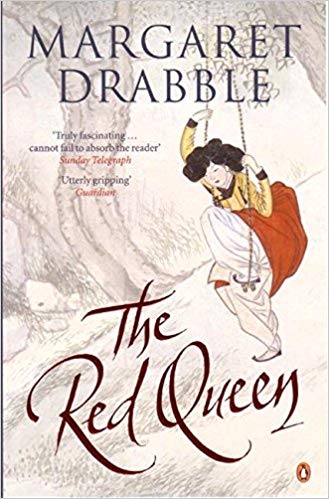
Margaret Drabble - The Red Queen

Publisher: Penguin
Author: Margaret Drabble
Author: The Red Queen

It is a coincidence that my post on Lady Hyegyong's Memoirs directly precedes the review of this book. I have read other books in the meantime; I wasn't able to write about them as I was traveling back to my home and struggling to get the house back on track after a long absence.

I came across this book when I was looking for Lady Hyegyong's memoirs. I set the book aside as it was available only as a paperback in India.  After I was relaxing after setting my house back in order, I ordered the book.

The first part of the book is titled "Ancient Times". In this part we get a chronological order of Lady Hyegyong's life. I say 'chronological order' because her diary touches on important events according the person she is addressing. When she is writing for her nephew, she touches on her early life and barely mentions 'that event', the death of her husband Prince Sado. When she writes for her son, King Jeonjo her narrative is different and she touches on events that are of importance to that era. She opens up about her husband only in the last part   Here, Margaret Drabble summarizes Hyegyong's life in correct order.

In the second part of the book we meet Babs Halliwall who is on her way to South Korea for a conference. She has packed some books to read, among them Lady Hong's (Hyegyong) memoirs which was a mysterious gift received from Amazon. She never really tracks who this gift is from. Reading the book on her flight, she is struck by the story and decides to visit the palace and the tomb of the queen.

Once she is at the conference she finds there are a lot of people who know about Lady Hong and are willing to help her visit the places the Crown Princess lived in. She also talks to the star of the conference, Jan Van Jost about the Crown Prince Sado and the memoirs of his wife. Jan Van Jost is equally captivated with the story and accompanies Babs on her pilgrimage to the Palaces.

The story of Babs and Jan obstructs the story of the Crown Princess which was supposed to dominate this book.  The tale tells us how memory travels, how books are adopted by various agents to make it more popular.  Yet the story of Crown Princess does not travel enough for us to get a sense of that.  Most people Babs meets in Korea already know about it.  She conveys it to Jan and later to another companion. It does not merit the effort the 'ghost' of Lady Hyegyong puts in to popularize her story.

Also the 'ghost' talks of parallels she has found in stories of other queens, a perspective she gains after she becomes a ghost and was able to access the information, interrupts the narrative.  Korea is merely a destination for Babs and never really comes alive, her visits to the Palace are desultory and not given enough mention.  It is Babs own story with Jan Van Jost that claims all the attention.

As for me, I was drawn to the story of Prince Sado after watching a South Korean historical TV series that featured King Jeonjo. He talked about his father Prince Sado and that set me off on some research about the unfortunate fellow. Subsequent viewings of Korean TV series based on the Kings who were Sado's predecessors and successors have honed my interest and knowledge. There is no evidence of such a wealth of information in the book.

Sunday, April 29, 2018

Lady Hyegyong - The Memoirs of Lady Hyegyong

Publisher: University of California Press
Author: Lady Hyegyong
Title: The Memoirs of Lady Hyegyong
Translator: JaHyun Kim Haboush

I was reading one of my earlier posts today about Amanat's Inder Sabha where I talked about references in popular (mass appeal) art which often led to some classical works. This book is another case that supports that theory.

I have lately become addicted to watching Korean Series also known as K-Drama. They are unabashedly mainstream, depending on trusted tropes and situations. Their aim is to garner TRP's while constantly trying to gauge ways to please audiences. One such K-drama that I liked was Sungkyunkwan Scandal that was based in the times of King Jeongjo of Joseon Dynasty. Towards the end of the series things turned very political with the King wanting to find a poem written by his grandfather citing his regret over being forced to kill his own son.

I could not understand these references, hence I googled a little and came across a horrific incident that took place in those times.  King Yeongjo (Jeongjo's grandfather) had put to death his son Prince Sado by asking him to climb into a rice chest (a box that was about 4'x4'x4') and sealing it till he died a few days later. He was eliminated by such means because he could not be killed as he was a royal. If he had been disowned, his wife and child would also have been disinherited, or worse, killed.  Sado was asked to do this as he was mentally unstable and frequently killed people.  The information also listed that his wife, Lady Hyegyong wrote memoirs which described this incident in full detail.

Ever since, I had wanted to read these memoirs. Scribd.  thankfully had a copy. The memoirs are divided into 4 different years. The first few chapters are about the birth and life of Lady Hyegyong, how she was brought up by her virtuous parents, how she was selected to be the wife of Prince Sado. Later we read about various conspiracies that Lady Hyegyong's family members faced. The conspiracy part was rather tedious, frankly. Till now she spoke of the killing of Prince Sado indirectly, referring to it as 'that incident'. I thought that was all we were going to get. In the last chapter, after the death of her son King Jeongjo, she decided to write all about Prince Sado and what led to his end in full detail. This was because there were various erroneous opinion that she wanted to correct.

With admirable emotional restraint but with candor, she talks about Sado. How his father neglected him initially, keeping him away from positive parental influence and isolated among inferior maids and eunuchs. Later, as unsavory traits began building up in Sado, his father heaped scorn upon him, not caring to understand him or correct him. Things escalated to the extent that Sado became quite deranged. At one point Lady Hyegyong wished her husband had died of an illness rather that being forced to do away with himself. It was particularly touching to read this part. We become aware of how deeply she felt about seeing her husband being thus punished and the repercussions she faced all her life due to it.

It the the final chapter and the early one about Lady Hyegyong's life that are priceless. I can imagine what a rich source these memoirs were for historical scholars.

The translation by JaHyun Kim Haboush is truly excellent. At no point does the language rankle or seem inappropriate to the era. Lady Hyegyong wrote in Hangul and I am sure her language was courtly and formal, as befits a woman who tragically missed being a Queen. The same formal tone is conveyed in English. One can feel the loftiness of the original prose. Even while I was a little bored by the dull patches in the memoirs I never ceased being appreciative of the translation.

Friday, April 27, 2018

Philip Roth - Goodbye Columbus

Publisher: Houghton Miffin
Author: Philip Roth
Title: Goodbye Columbus

I read this book long back, in the late 1980s or early 1990's. I don't remember where I acquired a dog eared copy of this book. It was a big favorite of mine and I re-read the title story many times. In those days I read what I liked without trying to deconstruct why. I am like that still, at times, but writing many reviews had made me think more deeply about what impresses me about the book.

The book contains, besides the title novella, five short stories. But I will be talking only about the novella.

I revisited this book a few days ago to refresh my memory. It was like revisiting a much loved place. Neil Klugman lives in a middle class household in Newark. One day he meets Brenda Patimkin at an uppity club that his rich cousin has invited him to. He fancies Brenda and calls her up. They start meeting and Brenda seems to like him back. Her father is the owner of Patimkin Sinks and is very rich.

There is a divide between them despite them both being Jews. Brenda goes to a fancy college in Boston and Neil is a librarian at Newark library.  Can their summer romance survive the class difference.

The novella is full of details about the lives of Klugmans and Patimkins. Neil's aunt is obsessed about feeding different members of the family and remarks every time Neil incurs any cost. Brenda's mother also disapproves of Neil. Brenda also does not get along with her mother. The various uncles of Brenda slap Neil on the back and ask him to play his cards well with Brenda to be prosperous.

This young romance reminded me of Erich Segal's Love Story. That was a book about a WASP upper class boy who falls in love with a pretty not too rich Latino girl. In Goodbye Columbus the role is reversed and the shadow on the couple is not caused by ill health. In a way, Goodbye Columbus is like a more realistic Love Story. I adore Love Story but will admit that it is a mushy romance at its heart.

This comparison was brought even more sharply into focus for me when I found out that the film version of Goodbye Columbus had Ali McGraw in the lead role. She is the sweet, pert and witty Jenny in Love Story.  Brenda of Goodbye Columbus is not sweet, she knows the class divide between her and Neil and uses it to rile her mother. In Love Story Jenny accuses Oliver of liking her because of her middle class, non-white background. Brenda and Neil are also drawn to each other because of the gulf between them. For Neil, Brenda is a glimpse into a better life, and Brenda wants to show her independence by being with him.

It is a short novella, again like Love Story, but packs a lot more into it.  It cannot be read just as a summer romance.


Wednesday, April 25, 2018

Kevin Kwan - Crazy Rich Asians

Publisher: Anchor
Author: Kevin Kwan
Title: Crazy Rich Asians

The books starts with a Chinese family who walk in the rain to their hotel, Carltons, one of the poshest hotels in London. The manager takes one look at the bedraggled orientals in his reception and refuses them entry. The lady heading the group protests that they made confirmed reservations long ago, but are turned away. In desperation, she calls her husband in Singapore. A few minutes later, the group returns to the reception. The manager is irritated to see them back. That's when he spies the owner of the hotel with them and snaps to attention. Apparently, the lady's family has just bought the hotel. The first thing she does is to give the racist manager his marching orders.

The book starts with this anecdote to illustrate how rich some Asians can be.  Their daughters buy up couture collection before it is displayed. They buy jewelry, bags and shoes without inquiring the price. All this entitlement does not come cheap. The scions of these families have to toe the family line rigidly. They have to be good at studies, marry appropriately and multiply to please their families.

Then Nicholas Young throws a spanner in the works of his family by falling for an almost ABC (American Born Chinese) who has no background, no family to speak of. What of her education, intelligence and beauty - these are useless matters. Young's family gets together to break them up. It results in much fun and much heart break. But before that, we get an up close and personal look at how the Singaporean Chinese Crazy Rich families live.

The book was a fun ride. Designer Label names were thrown about recklessly. But it was not merely candy floss. We get a close look at how the high society of Singapore behaves. What a tight rope they walk. There are ones among them for whom the exercise is a cake walk. They were to the manner born, their wealth goes back for generations and their place in the society is decreed. There are others who have the money but not lineage. They are left scrabbling for power and position.  It is this 360 degree view of their society that makes the book such a compelling read.

Crazy Rich Asians has been made into a movie as well. It is garnering buzz. I took a look at the trailer and there seemed to be some departures from the book. I am hoping the movie is as much of a fun as the book was. There are two sequels to the book called China Rich Girlfriend and Rich People Problems.

When I was in the middle of the book I realised why I was enjoying the book so much. It was because the plot was so similar to many Korean Series that I have watched and loved. Dirt Rich Korean boy falling for dirt poor girl. No wonder I felt so at home.